
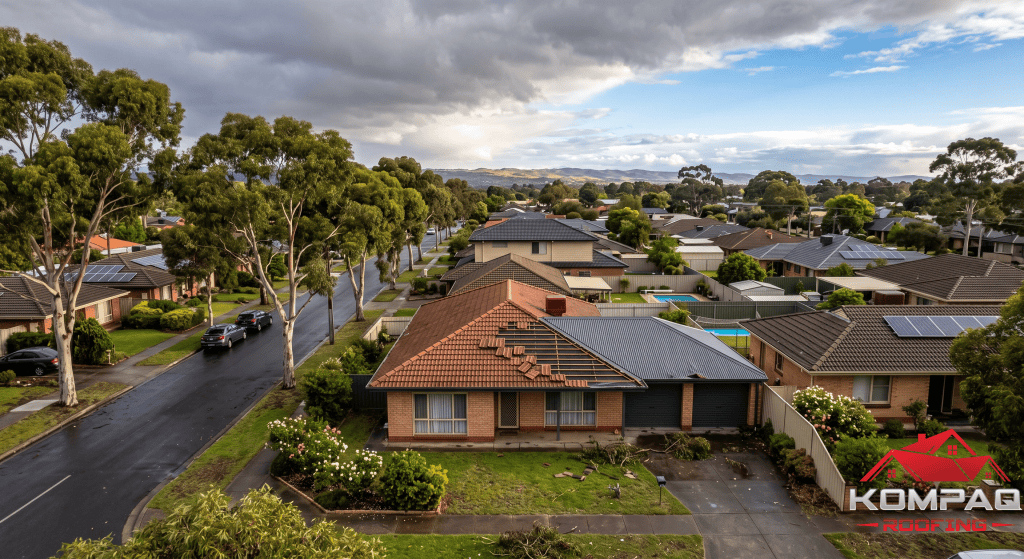
Hail hammering the roof for ten minutes, then blue sky again like nothing happened. If you’ve lived through a spring storm anywhere in Adelaide, you know how fast it moves — and how confusing the aftermath can be. Call the insurer first? Get someone up on the roof? Wait and see how bad it actually is?
This guide walks through what’s usually covered, how to assess the damage properly, and what to do next — in order. (Every policy is different — the details below are general guidance, not advice on your specific cover.)
Why Adelaide storms make roof claims a bit different
Adelaide’s hail season runs roughly October to February, with the worst of it typically landing in November and December. Severe weather tends to build over the Adelaide Hills on warm afternoons, then push west across the metro area – sometimes gaining intensity as it hits the sea breeze along the way. That’s why the Hills and the northern suburbs often cop the heaviest hail, even when the city itself gets off comparatively lightly.
The aftermath isn’t always obvious straight away. A few dented gutters or a handful of cracked tiles can look minor from the ground, and by the time anyone gets a proper look, the next system might have already made things worse. There’s also a predictable pattern after a major event: claims spike across the whole metro area at once, assessors work through a backlog, and unlicensed operators start doorknocking the worst-hit streets within days. None of that changes what your policy covers – but it means documentation and timing matter more than they would after a quiet, isolated repair.
This is also where the cost of waiting becomes real. A cracked tile or a small tear in the roofing membrane might not look urgent on day one. Left through a week of follow-up rain, though, it can turn into a ceiling stain, then damp insulation, then a repair bill that covers a lot more than the original event. Acting early isn’t just about the insurance paperwork – it protects the property itself while everything else gets sorted.
What Australian insurance usually covers – and what it doesn’t
Storm and hail damage is generally one of the more straightforward claims, because insurers treat it as a sudden external event rather than something that built up over years.
What’s usually covered
Damage from hail, strong wind, or a fallen branch is typically covered under a standard SA home policy. So is a leak that starts because the storm itself created the opening – a lifted sheet, a cracked tile, a branch through the guttering.
What’s usually not covered
The grey area is wear and tear. A roof that was already well past its realistic lifespan, with brittle sealant and tired flashing, may have simply given way under conditions a newer installation would have handled without issue. A proper inspection usually reveals which one actually happened. Poor original installation and skipped maintenance fall into the same excluded category – even when a storm is what finally exposed the problem.
It’s worth understanding why insurers draw this line so firmly. A policy covers sudden, unexpected loss – not the ordinary cost of owning and maintaining a home. If every ageing roof that finally failed during a storm were treated as storm damage, premiums for everyone would need to rise to cover it. That’s part of why the assessor’s job focuses so heavily on cause: not just what broke, but why it broke when it did.
The type of damage often points to the cause. Hail typically dents metal roofing and can crack the protective coating on Colorbond, which left unaddressed can lead to rust starting at the impact point. On tile roofs, the same hail tends to produce hairline cracks that aren’t always visible from the ground but can let water in over time. Knowing which pattern you’re looking at helps when you’re describing the situation to your insurer.
| Type of damage | Usually covered? | Note |
| Hail cracked the tiles | Often yes | Depends on your policy type |
| Leak from an old, worn roof | No | Wear and tear isn’t covered |
| Fallen tree | Often yes | Documentation is important |
| Rust or gradual corrosion | No | – |
| Water damage inside the home | Depends | The cause matters more than the result |
How to document damage properly, before the assessor arrives
Photos beat descriptions every time. Assessors often can’t get out for a few days after a major event, sometimes longer once they’re working through a metro-wide backlog. By then, rain can wash away hail marks, wind can shift loose material, and some of your best evidence is simply gone.
Walk the property first and photograph what you can safely reach – the roof where visible, the ceiling from inside, any affected walls, the guttering and downpipes, and anything like an outdoor AC unit that might have copped a hit. Wide shots show the overall path of what happened; close-ups capture the detail an assessor will actually be looking for. Note the date and rough time of the storm too, since insurers often cross-check this against Bureau of Meteorology records.
There’s an important distinction between temporary and permanent repairs here. If water is actively coming through the ceiling, most policies actually require you to act – this is usually called a duty to minimise further loss. Tarping a hole, clearing a blocked gutter, or arranging emergency Make Safe services isn’t something to wait on. What you should hold off on is the permanent fix: replacing tiles, resealing, or anything that removes the evidence an assessor needs to see. Keep any receipts for that emergency work too, since reasonable costs are often reimbursable.
One thing worth doing that often gets missed: photograph the same areas again a day or two later if you can, particularly after any follow-up rain. A leak that wasn’t visible right after the event can show up once water has had a chance to work its way through, and having a dated record of that progression can strengthen a claim considerably.
What to check from the ground, without climbing up
Dented guttering or downpipes usually mean the roof took a similar hit, even if it’s not obvious from the ground. Stains, bulging, or discoloured patches on the ceiling inside are often the first visible sign a leak is working its way through – worth a photo even if it looks small. If you can safely check the roof cavity, look for damp insulation or water tracking along the timber. From outside, glance along the roofline for tiles sitting slightly off from their neighbours, or metal sheeting that’s lifted at an edge.
This isn’t a substitute for a proper assessment. It’s just enough to know roughly what you’re dealing with before you make any calls.
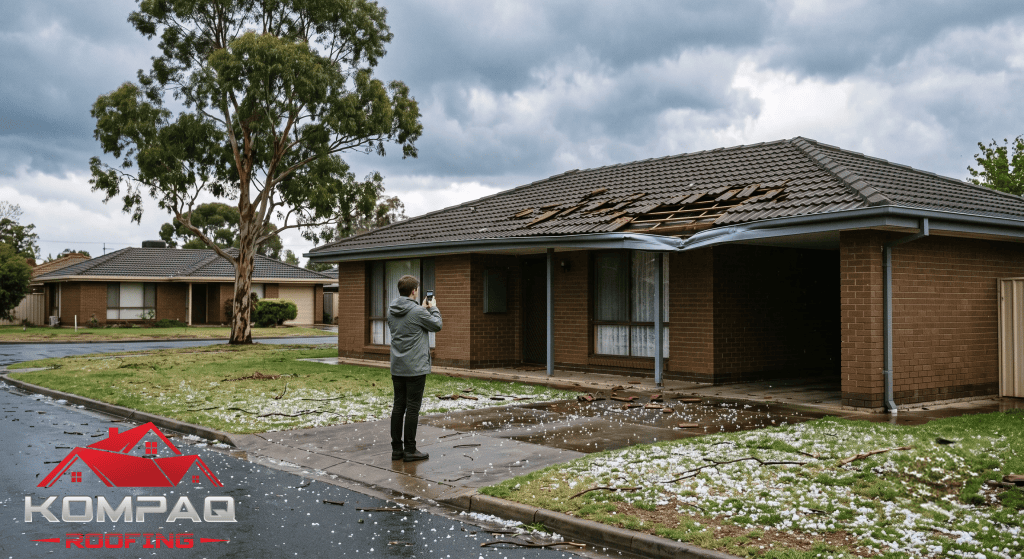
Step by step: what to do after a storm
- Make the property safe from further damage – temporary covers, sealing off obvious gaps, moving anything valuable away from an active leak.
- Document everything – photos, the date, a brief written note while it’s fresh.
- Contact your insurer and lodge the event, even before you know how serious it is.
- Call a licensed contractor for roof repairs and inspections to get an independent assessment.
- Get a written summary to reference alongside your claim.
- The insurance assessor visits the property.
- Claim decision – approval, partial approval, or a request for more information.
Kompaq Roofing can handle step four with an initial visual inspection and a written summary of what we find. What we can’t do is guarantee insurance approval or provide the kind of detailed loss-assessment report some claims require – that call, and that level of documentation, sits with your insurer and their assessor.
Common mistakes that cost money
Delaying causes the most trouble. Most policies have a window for reporting an event, and letting weeks slip by – even while you’re dealing with everything else a storm throws at you – can turn a straightforward claim into a complicated one.
There’s also a natural urge to fix things properly right away. Nobody wants a hole in their roof longer than necessary. But finish the job before the assessor has actually seen it, and there’s nothing left for the insurer to verify.
Some homeowners accept the first outcome without pushing back. If it doesn’t match what you’re actually seeing, most insurers allow a second opinion or an independent report – worth asking for if something feels off.
It’s also worth weighing up whether a claim makes sense in the first place. If the issue is minor – a couple of shifted tiles, say – check the likely repair cost against your policy excess before lodging anything. A $250 fix against a $750 excess means the claim would cost you money, not save it, and it still counts against your history when your premium comes up for renewal.
Then there’s who you let near the property in the first place. After a big event, Adelaide sees a wave of unfamiliar operators doorknocking the worst-hit streets. Some are legitimate. Plenty aren’t. A properly licensed local specialist is a safer bet than whoever gets to your door first.
It’s also worth being cautious about anyone offering to waive your insurance excess as an incentive to sign on the spot. This practice sits in a legal grey area in Australia and can complicate or even invalidate a claim if the insurer finds out. A legitimate contractor won’t need to offer it to win the job.
How to choose a roofing contractor after a storm
Check any SA roofing licence through CBS (Consumer and Business Services) before agreeing to anything – this matters more than most homeowners realise, and it takes about two minutes online. It’s also worth asking directly whether the tradie carries their own insurance. A properly covered operator in Adelaide should have public liability cover and be happy to confirm it before anyone sets foot on your property.
Ask for a written, itemised quote rather than a verbal number on the spot – that’s what your insurer will want attached to the claim. Experience with insurance claims specifically is worth asking about too; a contractor who’s done this before already knows what documentation an assessor expects. Check real reviews as well – Google, not just the testimonials on their own website – particularly for anyone who approached you rather than the other way around.
Frequently asked questions
How quickly do I need to report storm damage?
Timeframes vary by insurer and policy. Check your PDS or call your insurer directly to confirm – but generally, sooner is safer than later.
Do I need a licensed roofer, or can any contractor do the assessment?
A licensed SA roofing contractor carries more weight with assessors for anything going into an insurance claim, and produces a report that holds up if the claim is disputed.
What if I disagree with the insurance assessor’s findings?
You can usually request a second assessment or submit your own independent report – check your policy for the specific process.
Is storm damage always covered?
Not automatically. It depends on your policy and, critically, the cause of the damage. Wear and tear is typically excluded even when a storm is what makes it visible.
Can I get a second opinion before deciding on repairs?
Yes, generally. If the first assessment doesn’t match what you’re seeing, most insurers allow this.
What if the storm damage seems minor – is it still worth claiming?
Depends on the numbers. If the repair cost is close to or below your policy excess, claiming can end up costing you rather than saving you, and it still shows on your claims history. For anything beyond that, getting it assessed and documented early is usually easier than dealing with a bigger problem later.
If your home’s been hit by a storm, we’ll come out, take a look, and give you a written summary of what we find. No obligation.
Book a free storm damage inspection →
This article is intended for general information only. Insurance coverage depends on the terms of your specific policy – always confirm details directly with your insurer.
Thinking about your roof? Let’s take a look.
Whether it’s a full replacement, a re-roof or you’re just not sure what your roof needs, the Kompaq Roofing team can take a look and give you straight, no-pressure advice. We don’t patch over problems, we solve them.
Get a free quote