
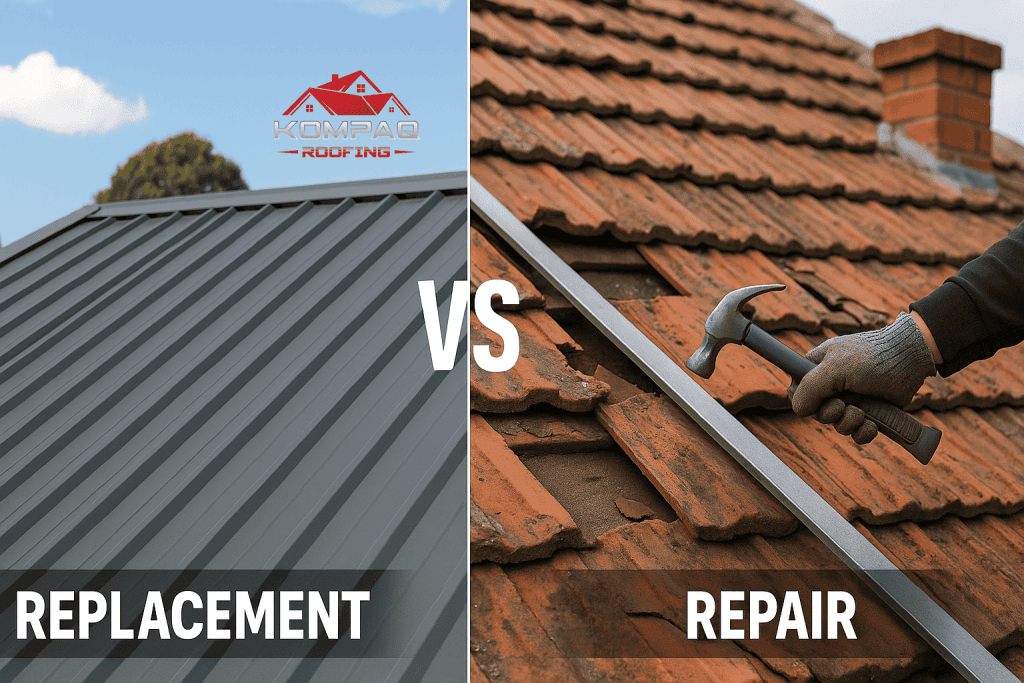
Investing in constant fixes of leaks or going for reroofing shouldn’t be done on a whim: a more well-thought-out approach will provide you with lasting results. Any roof repair vs replacement considerations should be personalised and consider the settings introduced by the state and age of your current roofing system.
Understanding the Basics
Learning more about roof components will help you prevent overspending and allocate funds and resources to solving issues that matter. Material compatibility, different structural stability of gutter, ventilation, and other systems, code upgrade requirements, and other considerations shouldn’t be underestimated by homeowners in Australia.
Before getting started with a minor roof repair, work on a long-term maintenance strategy first. These basic distinctions between the two troubleshooting tactics fuel it all.
What Is Reroofing?
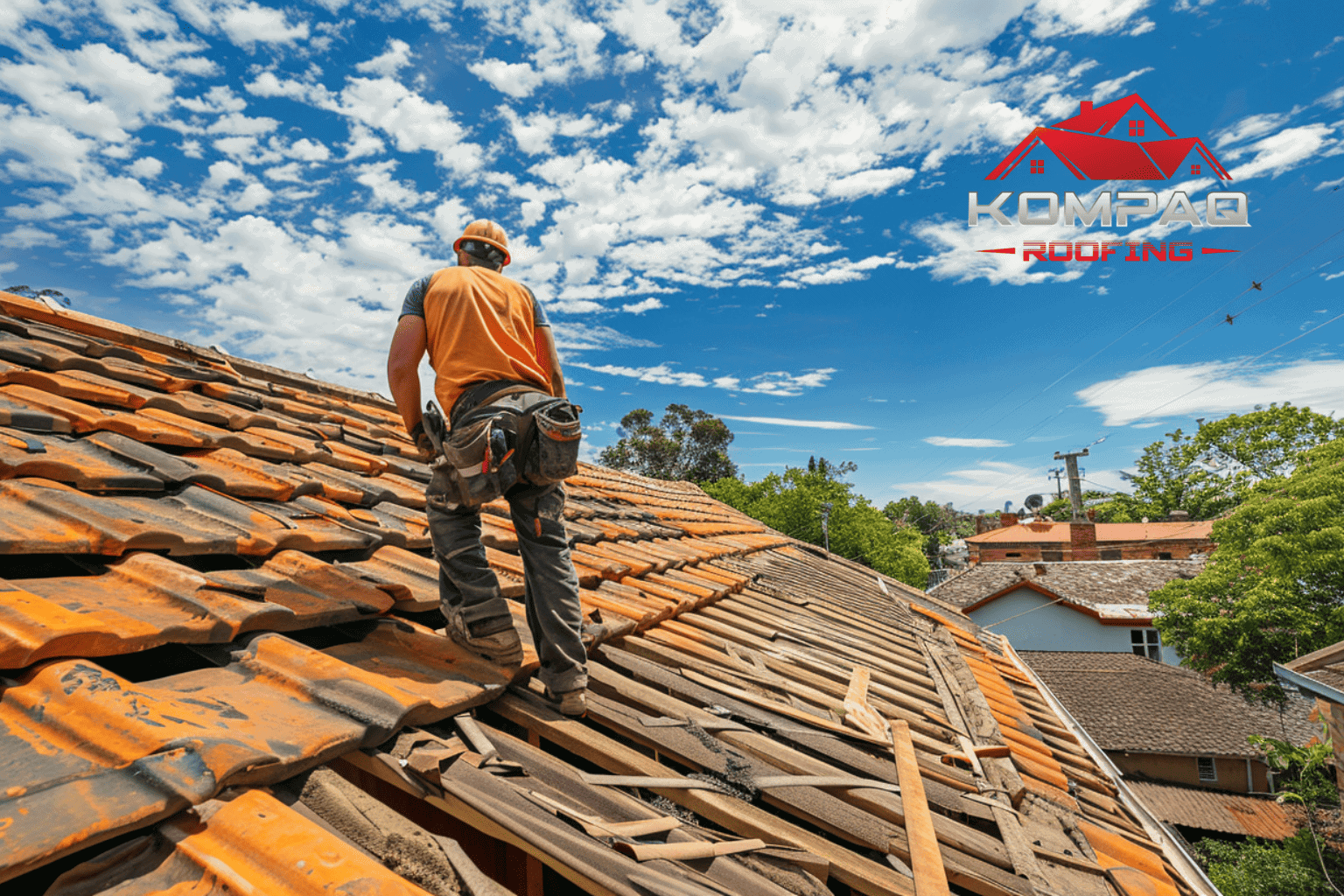
This process is all about elevating the current system without a 100% tear-off of the current roofing material. It’s commonly applied when the existing structure remains sound but aesthetics and waterproofing fail. Modern reroofing uses lightweight metals or polymer tiles to reduce load stress. Please note that building codes in Australia often require safety certification and compliance checks before reroofing.
What Is Roof Repair?
That’s how you address localised issues. What does roof repair involve here? Repairs target symptom areas, not the overall roof system, limiting its potential longevity. Partial replacement of damaged sheets or tiles, resealing joints, and fixing leaks are common examples.
This strategy is definitely more appropriate for younger roofs or those recently serviced under warranty. The effectiveness depends on the damage scope, underlying insulation health, and material compatibility.
Key Differences Between Reroofing and Roof Repairs
The basic distinction between the two is as follows: while repairs extend the lifespan of the system temporarily, reroofing resets it at once. Before getting started, consider legal guidelines for the target type of the roof in your area – those for Australian green roofs or asbestos cement roofs specifically in Queensland won’t be the same.
| Aspect | Reroofing | Roof Repairs | Additional Notes |
| Longevity Impact | Adds 40-70 years of structural protection | Extends life by 2-10 years, depending on the issue | Reroofing offers long-term insurance against recurring damage |
| Disruption Level | Higher | Minimal | Some reroofing projects may require temporary relocation |
| Suitability | Best for ageing, heavily weathered, or repeatedly leaking roofs | Ideal for newer roofs with isolated wear or storm damage | Climate and council guidelines influence suitability |
| Aesthetic Outcome | Fresh, uniform look that can boost property value | Maintains existing appearance with patchwork blending | Often chosen during renovations or pre-sale upgrades |
| Environmental Consideration | Can recycle old materials, but generates more waste overall | More sustainable — less waste, lower material use | Roof repairs are generally the greener short-term option |
Signs Your Roof Needs Attention
Regular inspections will help you track any changes in the integrity and performance of the existing system, letting you spot any issues early. Timely cleaning and maintenance will also make a difference. For instance, granule loss from asphalt shingles collects in downpipes before visible cracking appears, which is more than preventable. For the bigger picture, here are the signs you need a new roof rather than another patch.
Here are some telltale signs to recognise:
- Increased noise during rain;
- Debris accumulation;
- Uneven heating indoors;
- Rust streaks on metal roofing systems;
- Sagging gutters;
- Bubbling paint zones;
- Corrosion areas;
- Discoloured tiles;
- Loose sheets or tiles;
- Water stains indoors;
- Algae or moss growth.
Pros of Roof Repair
This form of immediate protection against minor issues is advantageous for several reasons:
- Lower upfront costs;
- Fast service delivery;
- Targeted troubleshooting;
- No changes to the original roof design;
- Property accessibility during work;
- It can be performed across seasons.
Minor repairs are the kind of job that looks simple but rarely is. Getting on a roof safely, spotting what’s really going on and fixing it so it lasts takes the right gear and experience, so even small repairs are best left to a licensed roofer. Reroofing is more demanding again, both in skill and equipment.
Cons of Roof Repair
One of the biggest concerns of roof fixing, especially without the assistance of professional teams in Australia, is that you might miss deeper structural decay in the system. Others shouldn’t be overlooked, either:
- DIY patching can cause moisture entrapment, encouraging mould growth.
- Repairs don’t usually address insulation or ventilation deficiencies.
- The cost efficiency of such projects declines when multiple small fixes accumulate over time.
- It may be difficult to match paint or coating on older materials.
- In regions with heavy rainfall in Australia, patched areas often fail before the next wet season.
Pros of Reroofing
Changing roofs may be for the better in several instances:
- This provides a completely refreshed waterproof barrier across the entire structure.
- Enhance the curb appeal with uniform, modern materials and finishes.
- That’s how you reduce maintenance frequency for decades due to material continuity.
- Elevate the insulation and ventilation system’s capacity, taking the energy efficiency of the building to the next level.
- It also helps in increasing the load resistance of the structure against wind uplift and storm impact in Australia.
- In comparison with simple repairs, these changes can raise your property’s market value and its compliance with current building codes in the region.
- It serves as a form of long-term investment that offsets initial cost through reduced future repairs.
In comparison with full roof replacement, reroofing can also be a more cost-effective solution – up to a 20%-40% difference.
Cons of Reroofing
Although there are instances when reroofing outperforms repairs, it isn’t an ideal solution for every requirement:
- It usually requires a higher upfront financial investment.
- This also adds more structural weight, sometimes necessitating framing reinforcement.
- Due to code restrictions, it isn’t viable on roofs with existing multiple layers in Australia.
- Given the complex nature of such projects, they may trigger extra building permit requirements, council review delays, and extended installation timelines, disrupting household schedules.
- Incorrect installation risks are higher, for instance, trapped condensation between layers, causing hidden algae growth and integral damage to the system.
While this is a permanent solution, it isn’t a perfect match for every project.
Climate Considerations in Australia
Whenever considering the pros and cons of painting roof tiles or other solutions to upgrade your property, take into account how those reflect the local climate peculiarities:
- Coastal homes — protective coatings are a must to minimise the risk of salt and wind corrosion.
- Tropical homes — moisture-resistant materials and insulation to prevent mould growth.
- Desert homes — additional means of protection against UV rays, including reflective finishes.
- Cyclone-prone northern homes — these must meet AS 4055 standards for wind classification.
- Southern homes — these require high-quality insulation to handle frost, wind, and heavy rain.
The weather conditions in your region will largely determine the rules of the game, helping you choose from numerous reroofing and repair plans.
Lifespan and Maintenance
Regular resealing of flashings is a smart move to prolong the lifespan of the existing system, since it prevents corrosion and water ingress. If you’re weighing surface treatments, our guide on roof restoration vs sealing explains what each actually fixes. It will also be wise to calculate maintenance costs in advance before coming up with the repair or reroofing plan. They may reach 1-3% of the roof value annually in high-exposure regions in Australia. Neglecting routine checks, on the other hand, can halve a roof’s expected service life.
How Long Repairs Typically Last
Minor patch repairs often last 1-5 years, depending on exposure and material integrity. With flashing replacements and resealing involved, the system can hold up for 7-10 years if properly applied.
Overall, the target roof’s age at the time of repair determines how long the fix remains viable. In addition, professional-grade operations typically offer two to three times more effective and lasting results than DIY patchwork. If there are any missed issues within the system, including poor ventilation, it may accelerate corrosion and other forms of damage beneath repaired zones.
Reroofing Longevity and Maintenance Needs
On average, a reroofed system lasts from 40 to 70 years, depending on the material and how well it’s maintained. As evidence shows, reroofed surfaces resist weathering far better than repeatedly patched ones. Professional assistance matters, too, reducing internal temperature variation and other concerns.
Insurance and Warranty Factors
Australian home insurance policies typically cover storm, fire, and accidental damage, while general wear or neglect is excluded. Understanding how insurance and warranty cover applies to your roof can save you trouble when it’s time to claim. Your roof’s age and maintenance history can largely influence claim acceptance and payout percentage. Please note that insurers often require proof of professional repair or reroofing invoices. In comparison, DIY fixes may void both insurance coverage and product warranties.
Warranty Differences Between Reroofing and Repairs
Let’s get straight to the point:
- Warranty coverage depends on full material system use – mixing brands may void coverage.
- Reroofing warranties often include corrosion and colour-fade protection, but that’s not true for repairs.
- Workmanship warranties require adherence to AS 1562 roofing installation standards.
- Improper drainage maintenance or foot traffic can void both repair and reroof warranties.
- Reroofing includes the re-certification of structural compliance, renewing your eligibility for future coverage.
Contact professional third parties for a deeper insight.
When to Choose Roof Repair
Here are a few cases when roof repairs are the right call:
- The damage is isolated to a small area – flashing, valley, or gutter sections.
- The roof structure and underlayment remain solid and moisture-free, which lets you focus on the issue at hand without additional concerns to solve.
- The system’s age is under fifteen years and remains within material warranty limits.
- Repairs are sufficient when issues with the roofing system are caused by a specific weather event.
Opt for professional inspection whenever needed to minimise the risk of hidden issues with the roofing system overall.
When to Choose Reroofing
This strategy is worth your time and effort when repairs don’t work anymore – for example, recurring leaks occur despite previous professional fixes. When underlayment or decking shows signs of water damage or mould, that’s another reason to say “yes” to reroofing. If you’ve reached that point, a professional reroofing in Adelaide resets the whole system instead of buying you another short fix.
You can also use this chance to upgrade your roof with additional solar panels or skylights, not to mention potential advancements of your insulation and other related systems. Updated compliance with the latest security standards in Australia is a given in this regard.
Professional vs. DIY
It can be tempting to handle a small roof issue yourself, but roofing is one of those jobs where DIY tends to cost more in the long run. Working at height is genuinely dangerous, and without the right tools and materials it’s easy to miss the deeper problem or create a new one. A quick patch that traps moisture or breaks a warranty can turn a cheap fix into an expensive one.
Working with licensed roofers means the job meets Australian renovation and installation standards, comes with proper quality control, and keeps your insurance and warranty cover intact. For anything beyond a quick look, that peace of mind is usually worth it.
Expert Tips for Homeowners
The best roof repair and reroofing project is when homeowners thoroughly track its progress. By keeping photos and documenting everything, it will be easier to solve any new concerns or handle warranty claims. Additionally, you can hire independent inspection agencies to define what troubleshooting tactics will be more beneficial in your particular case.
How to Get Accurate Quotes
When searching for licensed contractors, request service estimates and compare them in detail – at least three quotes to understand current pricing policies in the market. It will also streamline your decision-making, letting you opt for the best price-to-quality range for the service in Australia. On-site assessments are more than welcome for high-quality results.
Questions to Ask a Roofing Contractor
Verify if quotes cover a wide range of services, for instance, insulation, gutter alignment, and ridge cap finishing. Assess the expected timeframe for the project and request written details on it, including workmanship and material warranties.
Coming up with the best residential roof repair or reroofing plan is simpler once you understand the grounds for it – what types of issues to solve, the roof’s age, and other parameters. Cooperating with experts like Kompaq Roofing will answer several project-related questions, letting you extend the lifespan of the existing roofing system and ensure its performance in the long run.
Thinking about your roof? Let’s take a look.
Whether it’s a full replacement, a re-roof or you’re just not sure what your roof needs, the Kompaq Roofing team can take a look and give you straight, no-pressure advice. We don’t patch over problems, we solve them.
Get a free quoteFAQs
Is reroofing better than repair in the long term?
Reroofing is usually the smarter long-term choice, especially for older roofs or ones that need constant repairs. For genuinely minor, isolated issues on a newer roof, a repair can be enough.
Can I repair a leaking roof myself?
It’s not a good idea. Working at height is dangerous, and a DIY patch often hides the real problem or voids your insurance and warranty. It’s safer and usually cheaper in the long run to have a licensed roofer inspect the leak and fix it properly.
Does reroofing require council approval in Australia?
It depends on the project. Straightforward reroofing often doesn’t need approval, but structural changes or major design updates usually do. Always check with your local council before starting.
How do I know if my roof needs replacing?
Typically it’s when repairs are no longer effective in terms of quality or cost, when leaks keep coming back, or when the underlayment and structure show water damage. A professional inspection confirms it.
Which roofing materials last the longest?
With the right care and maintenance, metal and concrete roofing systems tend to outlast others, lasting for decades.